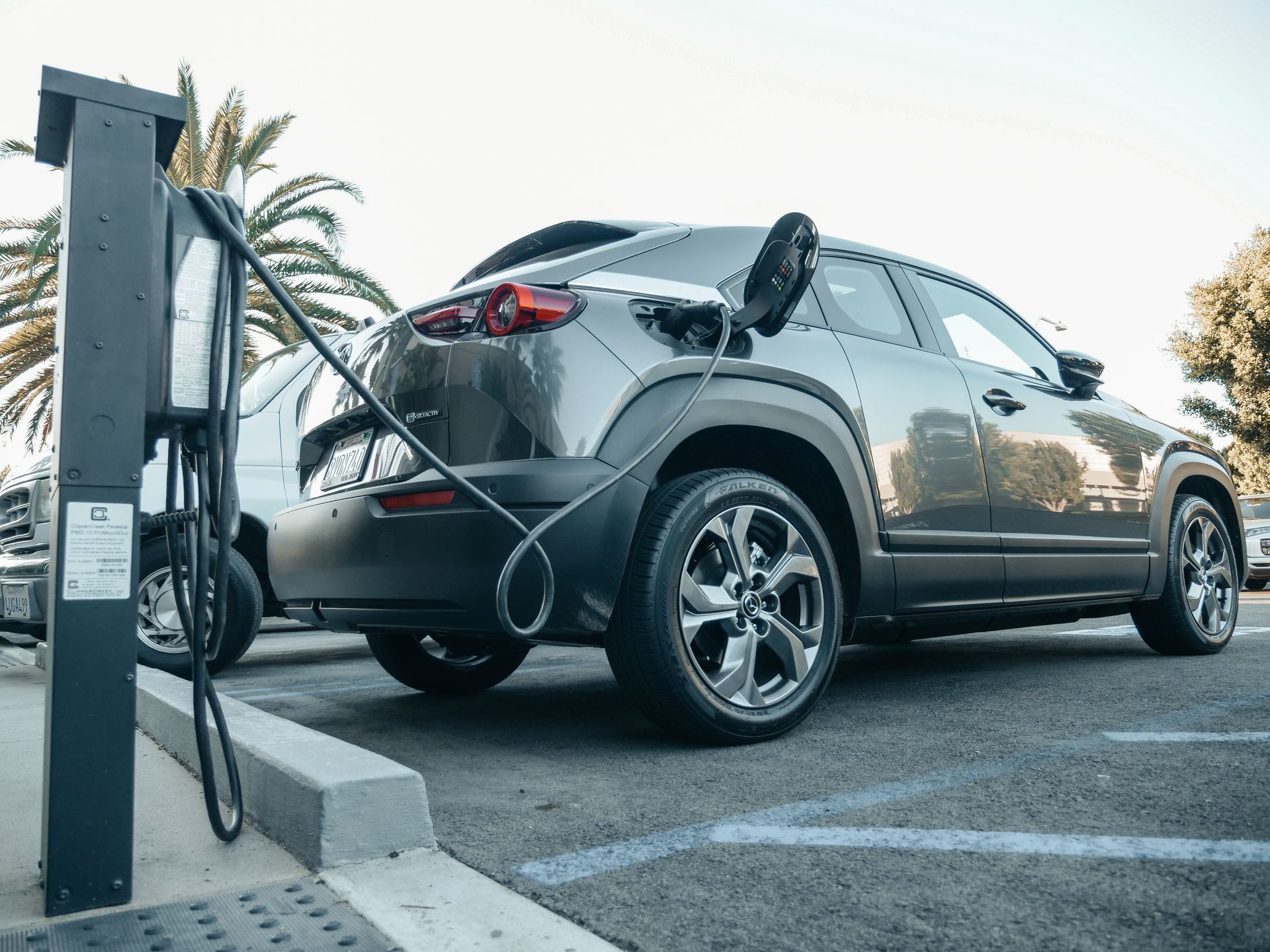
You have probably seen the ads for an EV novated lease. They are everywhere right now. The noise comes from the current Fringe Benefits Tax (FBT) exemption, and the government’s decision to wind it back in March 2027.
The savings from a lease can be genuinely worth it. But they come with trade-offs and risks that most guides and ads skip. Here are a few of the big ones:
Every EV website and salary packaging company tells you the same thing: get an EV on a novated lease before the FBT deadline, save thousands, and drive away for less. For some situations, that may make sense and can create some savings. But we see plenty of customers on the other side of it. They signed up for the dream, then found the drawbacks and trade-offs that cost them later.
This guide gives you the full story. So that you can weigh the true pros and cons and make the best decision for your situation right now.
______________________________________________________________________________________________________________________________________
A novated lease is a three-way arrangement between you, your employer, and a finance provider. In practice, it works like a salary-sacrifice deal on a car. You choose the vehicle, the finance provider funds it, and your employer agrees to make the repayments on your behalf.
Those repayments come out of your salary before tax, not from your take-home pay. That is where the saving starts. Additionally, because eligible electric vehicles currently attract a Fringe Benefits Tax exemption, those payments also leave your gross pay with no FBT added on top. In plain terms, you pay for the car with income you have not been taxed on yet, which lowers your taxable income and the tax that comes with it. And with the additional FBT exemption, you also eliminate the tax normally applied to employer provided perks.
Because you pay the lease from your pre-tax salary and through your employer, a few things are worth understanding before you sign. The first is what happens if you change jobs. The lease is linked to your current employer, so it cannot simply carry over on its own. Your new employer has to agree to take it on, and not all employers offer novated leasing. We cover what happens in that situation further down.
The second is how a lease affects other finance while it is running. When you sacrifice salary into a lease, your pre-tax income on paper drops. Lenders use that pre-tax figure to work out how much you can borrow and comfortably repay, which the industry calls serviceability. A lower assessable income can mean a smaller borrowing limit, so a lease can work against you if you plan to apply for a home loan or other finance during its term.
When you set up the lease, you estimate the number of kilometres you expect to drive each year. The finance provider then builds an allowance into your payments to cover running costs like fuel or charging, servicing, tyres, registration, and insurance. Rolling everything into one regular deduction is part of the appeal, and for a lot of people that convenience is a genuine drawcard.
The convenience does come at a cost, though, and it is worth understanding how the estimate works. Your budget is based on the kilometres you nominate at the start. Drive less than you predicted and you can end up overpaying into the running-cost budget. Drive more and you can come up short. At that point the provider reconciles and adjusts your package, and those adjustments can change how the lease stacks up once you compare the savings against the costs.
A novated lease also splits the car’s purchase price two ways. Part of it sits inside your regular lease payments. The rest becomes a residual amount, also called a balloon, that falls due at the end of the term. The size of the residual depends on the lease term, and it is set to ATO minimum guidelines. On a five-year lease, the maximum residual usually sits around 30% of the car’s value. When the lease ends, you generally have three ways to deal with it: sell the car and use the proceeds to pay out the residual, refinance the residual with a car loan, or hand the car back and start a new lease.
Refinancing the residual can cost more than you might think. A car’s value falls as it ages, so a lender prices that residual loan at a higher rate than the same car would have attracted when it was new. If the car will not sell for enough to cover the residual, or you cannot refinance it, you cover the gap out of your own pocket.
______________________________________________________________________________________________________________________________________
With an EV car loan or green car loan, you buy the car outright and own it from day one. The lender assesses your application, along with the car’s value and age at that point. They offer you a rate and a repayment, then lend you the full purchase amount. That amount covers the fees, and many lenders let you pay out early with no penalty.
To put it simply: you borrow the money, buy the car, and own it from the start. Your repayments come from your take-home pay, so your gross income stays intact. The rate and repayments lock in when the loan settles, so the cost stays consistent. And if your circumstances change, you can switch jobs or sell the car without causing complications with your loan.
______________________________________________________________________________________________________________________________________
Until 31 March 2027, eligible battery electric vehicles keep the full Fringe Benefits Tax exemption on a novated lease. To qualify, the car needs to sit below the luxury car tax threshold, which is $91,387 for 2025-26 (Australian Taxation Office). This is the window where the saving is largest.
After that, the rules change in stages.
From 1 April 2027 to 31 March 2029, only EVs priced at $75,000 or below keep the full exemption. EVs above $75,000 but below the luxury car tax threshold drop to a 25% FBT discount. From 1 April 2029, the full exemption ends for new arrangements. All eligible EVs under the threshold then move to a flat 25% discount. The benefit does not disappear, but it shrinks a fair bit.
Plug-in hybrids are a separate case. New plug-in hybrid electric vehicles (PHEVs) have not qualified for the exemption since 1 April 2025. Only fully electric and hydrogen fuel-cell vehicles qualify now.
These staged changes are not yet law. The government announced them in the 2026-27 Federal Budget on 5 May 2026, and as of July 2026 they have not been legislated. The dates and thresholds above are what has been announced, so the detail can still shift before it becomes law. Make sure to confirm the current position with your accountant before you commit.
The government has indicated it will grandfather existing EV novated leases. A lease you enter under the current full-exemption rules should keep those rules for its original term. Changing that lease later can reset the clock, however. Refinancing it, extending the term, or moving to a new employer may count as a new arrangement under the newer rules. Everyone’s situation is different, so always confirm the tax outcomes with your accountant or employer before you act on any of this or make changes to an existing lease.
______________________________________________________________________________________________________________________________________
Every novated lease ends with a residual, also called a balloon payment. It is the portion of the car’s value left at the end of the term, set by ATO minimum guidelines. On a $55,000 EV over five years, the ATO minimum residual is 28.13%, which puts the balloon at roughly $15,500.
You cannot salary sacrifice that residual. You pay it with after-tax dollars, and it includes GST. To gauge the real savings, you have to weigh the tax you save across the lease against that lump-sum bill, because you will need to pay it if you want to own the car at the end of the lease.
EVs typically lose value faster than conventional petrol-powered cars, largely because used EVs out of warranty can carry higher servicing costs, particularly around the life and replacement of the battery. If the car’s market value at lease-end sits below your residual, you pay more than the car is worth to own it, and you top up the shortfall yourself.
Handing the car back and starting a new lease is the other option. That works if it was always the plan and a lease still suits your situation. Keep in mind you will pay the setup fees and costs of a novated lease all over again. If circumstances force you into that option at lease-end, rather than it being a deliberate choice, it can get expensive and leave you in a difficult spot.
A car loan works differently. Unless you choose a balloon structure, it has no residual at the end. Once you pay out the loan, you own the car. If it depreciates heavily over the term, you do not wear extra costs or have to cover a shortfall. For a comprehensive run down of car loans and how they are structuyred and work, as well as the various options available check out our blog, “From Research to Road: How to Find The Best Car Loans in Australia”.
A novated lease is tied to your employer. Leave your job and the novation ends. At that point you have three choices. Your new employer takes over the lease, though not every employer offers this. You keep paying personally from after-tax income and lose the tax benefit. Or you exit early and pay termination costs.
Those early termination costs can be significant. They can include the full residual agreed at the start, the remaining principal on the car, financier fees, and any outstanding admin or rental payments. The cost of paying out early can not only wipe out any savings the lease has produced so far, it can work out significantly more expensive overall. Job changes are one of the most common reasons a novated lease becomes a financial headache, and salary packaging companies do not always spell this out. You might have to cover the lease from your own pocket if a new employer will not take it on. Or, find your job options narrowed to employers who can offer a novated lease.
A car loan sits between you and your lender. Your employer does not come into it, so the loan runs the same way no matter where you work. If you need to sell the car and pay out early, most lenders these days let you do that without early-termination fees. Some even let you re-amortise the loan, which lowers your minimum repayments based on how much you have already paid off.
A salary packaging company administers your novated lease. They arrange the finance, handle the FBT accounting, pay your running costs from the budget, and charge a fee for doing so. Annual management fees commonly run to several hundred dollars a year. Over a five-year lease, that usually adds up to around $1,500 to $3,000 built into the arrangement, which trims your net saving.
Providers sometimes fold these fees into the lease payment without itemising them, which makes them hard to pin down. Make sure to always ask the salary packaging company to spell out the annual management fee and every other charge when you weigh up the benefits.
Buying or refinancing property soon? Then weigh the impact a lease can have first. Salary sacrifice under a novated lease lowers the gross income figure lenders use to work out your borrowing power. A lower gross income means a lower maximum loan and weaker servicing, no matter how healthy your take-home pay looks day to day. That gap can be the difference between qualifying for a refinance that saves you hundreds a month and thousands in interest a year. Or, on the other hand, it could be the reason you stay stuck with your current lender, paying more than you should.
We see this regularly. Customers look into a home loan after setting up a novated lease through their work, and find their borrowing power has dropped. From there, the only ways to lift it are to earn more or pay the lease out early and wear the costs. Often that means losing the property they had their eye on or missing the savings a refinance would have delivered. Either outcome can easily outweigh what the novated lease saved them.
It always pays to factor a lease into your borrowing power before you sign. Our team at Fox Home Loans can help you understand your borrowing power and how a novated lease might affect it. You can get a free borrowing power assessment or home loan review with the Fox Home Loans team, so you have everything you need to make the best call.
Even with the FBT exemption, you still carry a tax footprint from the lease. The value of the benefit still counts as a Reportable Fringe Benefit Amount (RFBA) on your income statement. Government income tests then add that amount to your adjusted taxable income (Australian Taxation Office). That flows through to a few things:
If you carry a HECS debt, receive family payments, or sit near a Medicare Levy threshold, the RFBA can shrink what you actually keep from the arrangement. Factor it into your thinking before you commit to a novated lease.
______________________________________________________________________________________________________________________________________
A manufacturer subvention rate is a car loan rate that the vehicle manufacturer subsidises, rather than the lender. The manufacturer covers part of the finance cost behind the scenes, which is how you sometimes see finance advertised at rates of 3% and less. For example, manufacturer EV promos in 2026 have been sharp, with some advertised rates around 3% p.a. (manufacturer EOFY offers, June 2026).
A headline rate like that can look unbeatable. The trade-off usually hides in the conditions: short terms, deposit requirements, balloon payments, little repayment flexibility, or eligibility tied to specific models and delivery windows. The risk is treating the headline number as the full picture.
Every loan has a “real” rate that covers the lender’s costs and risk. With a subvention offer, the manufacturer tops up the gap between that real rate and the low advertised rate. They either pay the financier directly, or shift part of their usual discount away from the car’s price and into the finance instead. If the subsidy comes from the same pool that would otherwise cut your drive-away price, you may have less room to negotiate on the car itself. A low rate does not automatically mean the cheapest outcome overall, or the best value over the life of the loan.
A recent customer of ours is a good example. They came to us after a dealership offered finance on a BYD Shark. The rate looked competitive, but it carried a maximum three-year term, early payout fees, other dealer fees, and a deposit requirement that did not work for them. Despite feeling like they had secured a great deal on a rate lower than anywhere else was offering, they had to dig into their savings and put off other plans. While the short loan term also meant repayments that stretched their budget.
We did the legwork for them. We compared over 50 lenders and hundreds of loan options, put the manufacturer offer next to what our lenders could do, and showed the real cost of each over the full term. We then matched them with a lender offering a specialty EV rate: a five-year term, no early payout penalty, a small establishment fee, and no deposit required. The result was a loan that saved them money over its life, gave them repayments that fit their budget, and delivered the flexibility they needed.
______________________________________________________________________________________________________________________________________
A specialist EV or green car loan keeps things straightforward. You borrow, you buy, and you own the car from day one. You are not tied to your employer. No residual bill waits at the end. No salary packaging company charges annual management fees. You don’t need to factor in the kilometres you drive. No RFBA touches your HECS or family benefits. And most importantly, there is no FBT phase-out deadline rushing your decision.
To compare the two options honestly, add up the full cost of a novated lease, including the residual and management fees. Subtract the tax saving. Then put that next to the full cost of an EV or green car loan. For most Australians, the car loan comes out ahead. Even with the FBT exemption, the other costs and knock-on effects usually eat into the savings, which can make a lease the more expensive path. The lack of flexibility alone adds substantially to the true cost.
Want a deeper look at EV finance and the questions we field every day? Check out our blog, Could an Electric Car Help You Put Money Back in Your Pocket Each Week?
______________________________________________________________________________________________________________________________________
At Fox Finance Group, we compare EV and green car loans, manufacturer promos, and specialty EV lenders across our panel. We show you the real cost of each over the full term: rate, fees, residual, structure, and every other factor that matters when you weigh up your options.
We have helped people right across Australia fund what matters most for 20 years, with $1 billion-plus in processed applications and over 1,100 five-star Google reviews. You can read about what people are saying about our team here
If you’re ready to compare your EV options and see what’s out there, you can get started online now, or reach out to our friendly team on 1300 665 906.
 Rowdie Lang |
Rowdie has been a part of our Team since 2020. He has witnessed firsthand the ongoing evolution of the finance industry as technology continues to change the way customers' access financial services. He has a passion for helping people and relishes the opportunity to work alongside our teams every day as they help our customers financial dreams come true.
|
 |
Reviewed by: Nathan Drew ✅ Fact checked 📅 Last updated: Jul 09, 2026 |
Our car loan pre-approval process is completely free. You’re under no obligation to accept a finance offer, and you remain in full control at every step. There is no fee if Fox Finance Group is unable to secure a suitable approval for you, or if you choose not to proceed with our loan offer.
If you decide to move forward, a one-off brokerage fee applies. Like any professional service, this fee supports our experienced team in securing you the most competitive loan options available. Most clients choose to have this cost included in their overall loan, meaning there’s no upfront payment required before your first repayment.
Car finance helps you acquire the car you want without having to save the money over a longer period of time. This allows you to keep your hard-earned savings in the bank for other items that don’t depreciate. This can help with cashflow, by being able to pay off the vehicle in manageable instalments (weekly / fortnightly / monthly) to suit your budget. For business owners, this can also be a tax-deductible expense.
Simply talk to one of our Car finance Lending Specialists, we will do all the hard work to compare available car loan rates from our panel of approved lenders. We’ll find you the very best car finance deal for your needs and circumstances.
Yes, self-employed applicants can qualify for a car loan. Most lenders ask for documents like tax returns, BAS, or bank statements to verify income. At Fox Finance Group, we can also assist with low doc car loans, which require less paperwork and often offer faster turnaround times, making finance more accessible for business owners and contractors.
A car loan is a type of finance that allows you to borrow money from a lender to purchase a new or used vehicle, then repay it over time with interest. The car often acts as security for the loan, which can help you access lower rates. Car loans can be tailored with different terms, repayment options, and loan amounts to suit your budget.